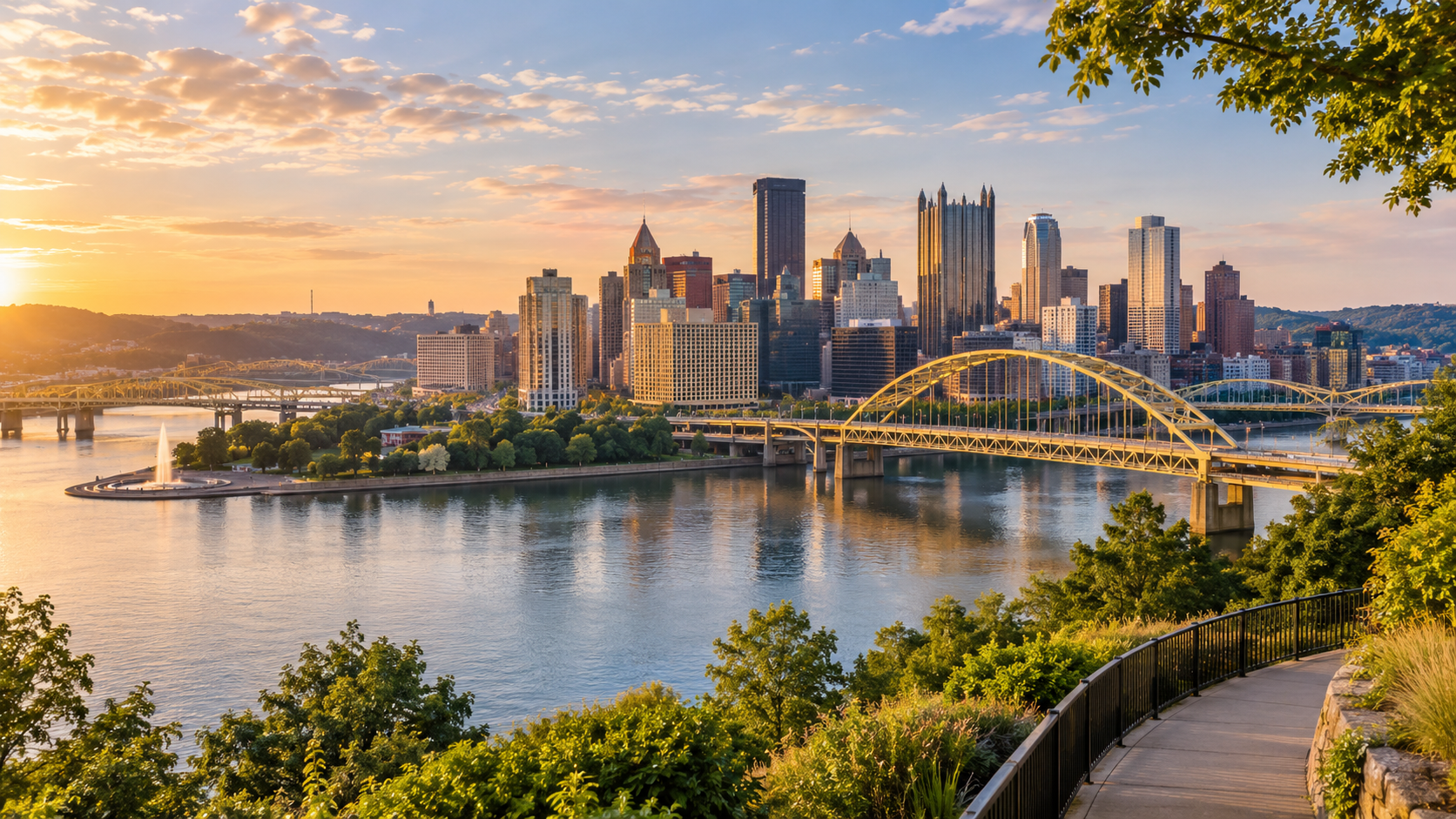
Why Choose Pittsburgh?
Pittsburgh offers major healthcare, education, cultural, and employment resources within a relatively compact region. Additionally, neighborhoods provide many housing and lifestyle choices.
Outdoor recreation is also readily available within city limits. Therefore, residents can combine urban living with parks, trails, and riverfront activities.
Cost of Living
Household expenses vary according to housing, transportation, insurance, and neighborhood choice. Therefore, newcomers should compare total costs before selecting an area.
Pittsburgh’s hills can also affect commuting decisions. Meanwhile, access to transit may reduce driving for residents in well-connected neighborhoods.
Real Estate and Housing Market
Housing includes historic brick homes, townhouses, apartments, condominiums, and newer developments. Additionally, styles and prices can differ substantially between neighborhoods.
Some communities provide dense, walkable environments near businesses. In contrast, other neighborhoods offer quieter residential streets and larger properties.
Education
Pittsburgh Public Schools serves students throughout the city. Currently, the district is implementing a multi-year facilities plan affecting future attendance patterns.
Therefore, families should confirm assigned schools when evaluating housing. Transportation eligibility also depends partly on grade and distance.
Healthcare Facilities
UPMC Presbyterian is a major medical and research hospital in Pittsburgh’s Oakland neighborhood. Moreover, it provides numerous specialized medical services.
Additional hospitals, clinics, and specialty centers operate throughout the region. Consequently, Pittsburgh serves as an important healthcare center for western Pennsylvania.
Recreation and Leisure
Pittsburgh maintains an extensive collection of parks. Schenley Park includes trails, sports facilities, playgrounds, a pool, and other recreational amenities.
Overall, the city contains 176 parks ranging from large regional spaces to neighborhood parklets. Therefore, outdoor recreation is available across many communities.
Dining and Shopping
Pittsburgh’s neighborhoods provide different dining and shopping experiences. For example, the Strip District features markets, restaurants, specialty stores, and local businesses.
Meanwhile, Lawrenceville and Shadyside offer additional restaurants, boutiques, and entertainment. Downtown and Oakland provide more urban choices.
Events and Festivals
The Three Rivers Arts Festival is one of Pittsburgh’s signature annual events. In 2026, the free festival featured hundreds of artists and musicians.
Additionally, annual events include Pittsburgh Pride, the Great Race, and several cultural festivals. Community programming continues throughout the year.
Transportation and Accessibility
Pittsburgh Regional Transit operates public transportation throughout the city and surrounding communities. Its system includes bus and rail connections.
Additionally, Pittsburgh’s terrain makes transportation choices especially important. Interstate highways and Pittsburgh International Airport support longer regional trips.
Conclusion
Pittsburgh combines distinctive neighborhoods, healthcare, education, parks, culture, and employment opportunities. Overall, the city offers several lifestyles within western Pennsylvania.